A bed that matches a brochure can still fail at the ward door, under the cleaning routine, or during patient transfer. By the end, you will have a practical sequence for defining requirements, comparing quotations, inspecting delivery, and protecting your facility from avoidable service and replacement costs.
Key takeaways
- Measure doorways, lifts, corridors and turning space before requesting quotations.
- Specify dimensions, load ratings, materials, cleaning methods and warranty terms in writing.
- Compare delivery, installation, training, spares and maintenance—not just the quoted price.
- Pilot representative items and record defects before accepting the full order.
Start with the care setting, route and room constraints
Before requesting quotations, establish the care setting, the furniture’s route into each room, and the room constraints that could make a suitable-looking product unusable. Medical furniture procurement care facilities in Chennai need different answers for an inpatient ward, ICU, emergency department, outpatient clinic, dialysis unit, rehabilitation area, home-care service or elderly-care setting.
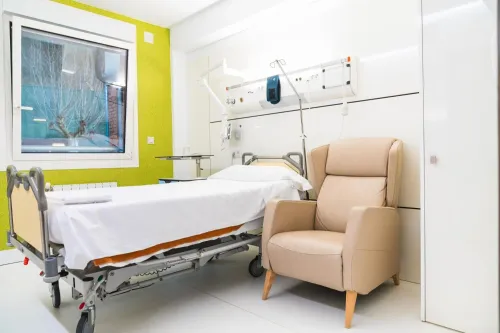
1. Record the clinical use and patient profile. Note whether staff need frequent repositioning, patient transfers, oxygen access, side rails, a manual crank or electric adjustment. A manual semi-Fowler bed can suit a low-dependency ward but becomes a poor choice when patients need repeated repositioning and caregivers are limited.
2. Measure the complete route, not only the room. Record the narrowest door opening, corridor width, lift dimensions, ramp gradient, turning space and room footprint. Check the bed with castors, raised side rails and detachable head and foot boards; a frame that fits the room can still stop at a lift or corridor turn.
3. Identify cleaning and infection-control limits before choosing finishes. Ask which disinfectants the facility uses and reject exposed foam, absorbent upholstery, open tube ends, sharp crevices and unsealed timber edges when they cannot be cleaned reliably.
4. Define the buying route. For public-sector medical furniture procurement, check the Tamil Nadu e-procurement portal and GeM, then follow the stated technical-bid, commercial-bid, earnest-money and delivery rules. A local showroom quotation is not a compliant tender submission.
This medical furniture procurement process produces comparable quotations only after quantities, delivery locations, installation access and room constraints are documented. Capture photographs and measurements in the quotation request so suppliers price the same problem.
Write measurable specifications for each department
Give each department a line item that states the task, measurable dimensions, load, materials and acceptance evidence. Do not let “semifowler deluxe manual” become the specification; procurement documents must describe performance rather than a sales label.
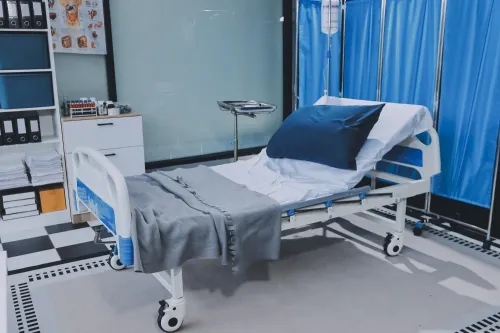
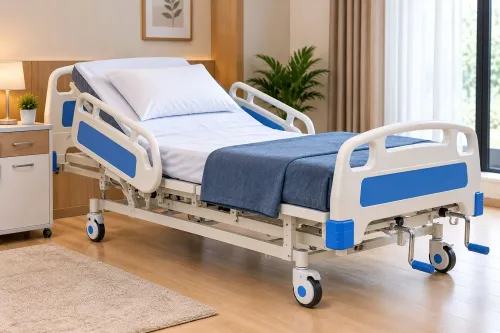
- Inpatient ward: specify a semi-Fowler bed with manual backrest and leg-rest functions, adjustment ranges in degrees, platform length and width, lowest and highest bed height, castor diameter, four-wheel braking, side-rail height and a safe working load that includes the patient, mattress, attendant and accessories.
- ICU: specify an electric ICU bed with powered height, backrest, knee-break and Trendelenburg movements, emergency CPR release, mattress platform dimensions, oxygen-cylinder provision, central locking and a documented safe working load. Reject a manual bed when frequent repositioning or limited caregiver capacity makes cranking unsafe.
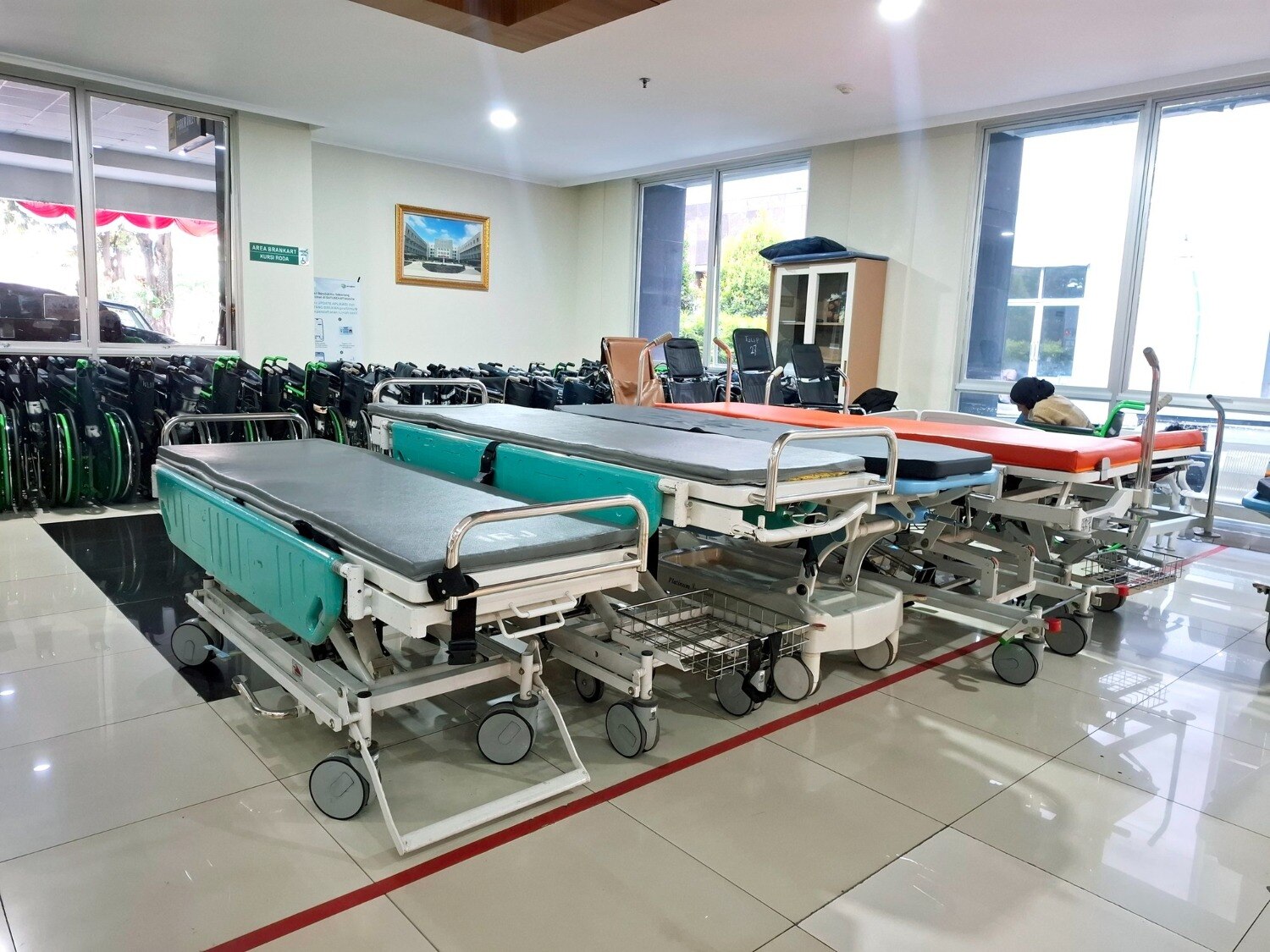
- Emergency department: specify a wipe-clean stretcher or bed with a defined height range, castor size, push handles, IV-pole socket, oxygen-bottle holder, radiolucent area if required and a target transfer time.
- Outpatient clinic: specify an examination couch by usable surface dimensions, fixed or adjustable height, paper-roll holder, upholstery seam design and disinfectant compatibility.
- Dialysis, rehabilitation and elderly-care areas: state chair or bed dimensions, armrest clearance, transfer height, upholstery fluid resistance, maximum user weight and accessory points.
Specify mattress thickness, cover material, fluid resistance, sealed seams, cleaning limits and replacement-cover availability alongside the bed. Require drawings, test or rated-load declarations, warranty terms and an approved-equivalent process instead of naming one brand.
Compare quotations on total delivered value
A lower factory price is not a lower cost if freight, installation and bed downtime sit outside the quotation. Ask both suppliers to price the same quantity, specification, accessories, taxes and delivery point, then compare the following:
- Does the price include GST, freight to each ward, unloading, assembly, installation, demonstration and removal of packaging?
- Are the mattress, IV pole, side rails, castors and other accessories included, or priced separately?
- What is the delivery lead time, and what compensation applies if beds arrive late?
- What response time, call-out fee, transport charge and maximum repair downtime apply under the warranty?
- What do replacement mattresses, covers, castors, gas springs, cranks and other common spares cost?
- Who provides service in Chennai, and where are parts held?
- Does the supplier meet the stated tender, GeM or Tamil Nadu e-procurement conditions if this is a public purchase?
| Cost or evidence | Quotation A | Quotation B |
|---|---|---|
| Freight and unloading | Included to named site | Extra or unclear |
| Installation and training | Included, with completion record | Not stated |
| Warranty service | Response time, call-out fee and downtime stated | Duration only |
| Consumables and spares | Mattress, cover and castor prices listed | No replacement pricing |
| Operational cost | Local repair and shorter bed downtime | Transport away for repair |
A medical furniture manufacturer in Chennai, such as Optimal Aid India, still needs to document these terms; local location alone does not prove eligibility or service performance. Reject “waterproof mattress” as a comparison point unless foam density, cover seams, cleaning limits and replacement-cover availability are specified.
Use a pilot and inspect every item before acceptance
A pilot installation exposes failures that a catalogue cannot: a bed that will not clear the ward door, a side rail that obstructs transfers, or a mattress that defeats housekeeping routines. Trial a small quantity in the actual ward before releasing the full order.
1. Match the delivery to the purchase order, not only the delivery challan. Record the model, quantity, dimensions, accessories, mandatory features, declared deviations and serial numbers. Photograph packaging damage and missing parts before opening every unit.
2. Test each manual bed, not just one sample. Operate every backrest and height adjustment, apply each castor brake, move the wheels, lock and release both side rails, and check platform stability. Inspect welds, coating, sharp edges, corrosion, mattress fit, head and foot panels, and visible damage.
3. Run the pilot through real work. Ask nurses and housekeeping staff to move a patient or load, change linen, transfer equipment, clean beneath the frame and pass through doors and lifts. Record crank effort, access around the bed and interference with trolleys.
4. Check the materials against the facility’s cleaning process. Confirm that the supplied disinfectants do not damage upholstery, foam covers, coatings or timber edges, and reject exposed absorbent foam, open tube ends and crevices that retain soil.
5. Keep an inspection sheet for every serial number. Mark defects, assign a correction date and withhold final acceptance until replacements or repairs pass a repeat test.
Sign only for quantities received; make final acceptance conditional on complete, working and documented furniture. That record supports payment decisions and warranty claims.
Complete installation, handover and after-sales controls
Do not release the final payment until each bed, mattress and accessory is installed in its intended room and passes a functional check. Installation must include level floors, tightened fasteners, working castor brakes, safe side-rail movement, correct mattress fit and unobstructed access for cleaning and patient transfer.
The medical furniture procurement process is incomplete without a signed handover pack. Request:
- Asset number, serial number, model and installation date for every item
- Assembly and user instructions, including safe working load and adjustment limits
- Mattress care instructions, approved disinfectants, dilution limits and drying method
- Warranty terms, excluded damage and the named service contact
- Spare-part list, preventive-maintenance schedule and emergency call procedure
Train nurses, attendants, housekeeping staff and biomedical or maintenance personnel at the point of use. Demonstrate bed adjustment, brake operation, side-rail locking, mattress removal, cleaning access and safe fault reporting; record names, dates and trainer details. A demonstration prevents a damaged crank, trapped cable or incorrectly cleaned mattress from becoming a patient-safety incident.
Acceptance requires the facility to record defects with photographs, serial numbers and a correction deadline. Quarantine furniture with exposed foam, torn covers, sharp edges, unstable frames, fluid ingress or incompatible mattresses rather than placing it into service.
Set after-sales controls before the warranty clock starts:
- Maximum response time for urgent and routine calls
- Local technician coverage and call-out charges
- Availability and lead time for castors, actuators, cranks, rails and mattress covers
- Preventive-maintenance visits and inspection records
- Escalation contact for unresolved failures
Review downtime and repeat faults monthly. A low purchase price loses its value when a bed remains unavailable because a basic spare part takes weeks to arrive.
Frequently asked questions
What should Chennai care facilities check before requesting medical furniture quotations?
Define the care setting, measure the route into each room, and record door, lift, corridor, turning-space and room constraints.
How should a facility write specifications for medical furniture?
State measurable requirements for dimensions, load capacity, materials, functions, cleaning compatibility, accessories, safety features and documentation for each department.
How can buyers compare medical furniture quotations fairly?
Compare the total delivered value, including product price, freight, installation, training, warranty coverage, spare parts, service response and replacement costs.
What controls belong in medical furniture acceptance and handover?
Pilot representative items, inspect every delivered item, record defects, verify installation, collect manuals and warranties, and define after-sales contacts and escalation steps.
Keywords