A semi-Fowler cot earns its price when your clinic repeatedly needs safe upper-body positioning, short-stay observation, feeding, transfers, or recovery care—not merely a more polished examination couch. You will be able to compare the alternatives, test whether a cot fits your rooms and patients, and judge whether its construction and service support justify the purchase.
Key takeaways
- Choose semi-Fowler positioning when patients need repeated upper-body elevation.
- Measure doorways, corridors, turning space and transfer routes before ordering.
- Inspect backrest movement, castors, mattress support and frame joints in person.
- Confirm cleaning compatibility with Chennai humidity and your daily disinfection routine.
When does a semi-Fowler cot justify its place in a small clinic?
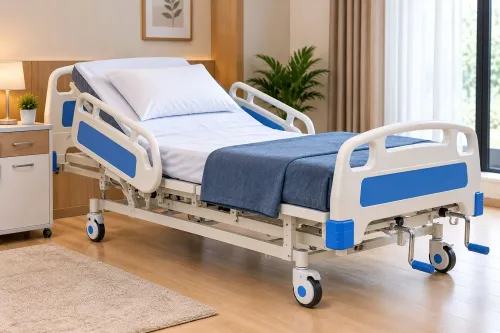
A semi-Fowler cot earns its place when patients need repeated upper-body positioning rather than a flat surface for a brief examination. Elevating the backrest to roughly 30–45 degrees supports feeding, respiratory comfort, clinical examination, transfers and post-procedure observation.
It suits a clinic with several such cases each day, especially when patients remain for recovery instead of leaving immediately.
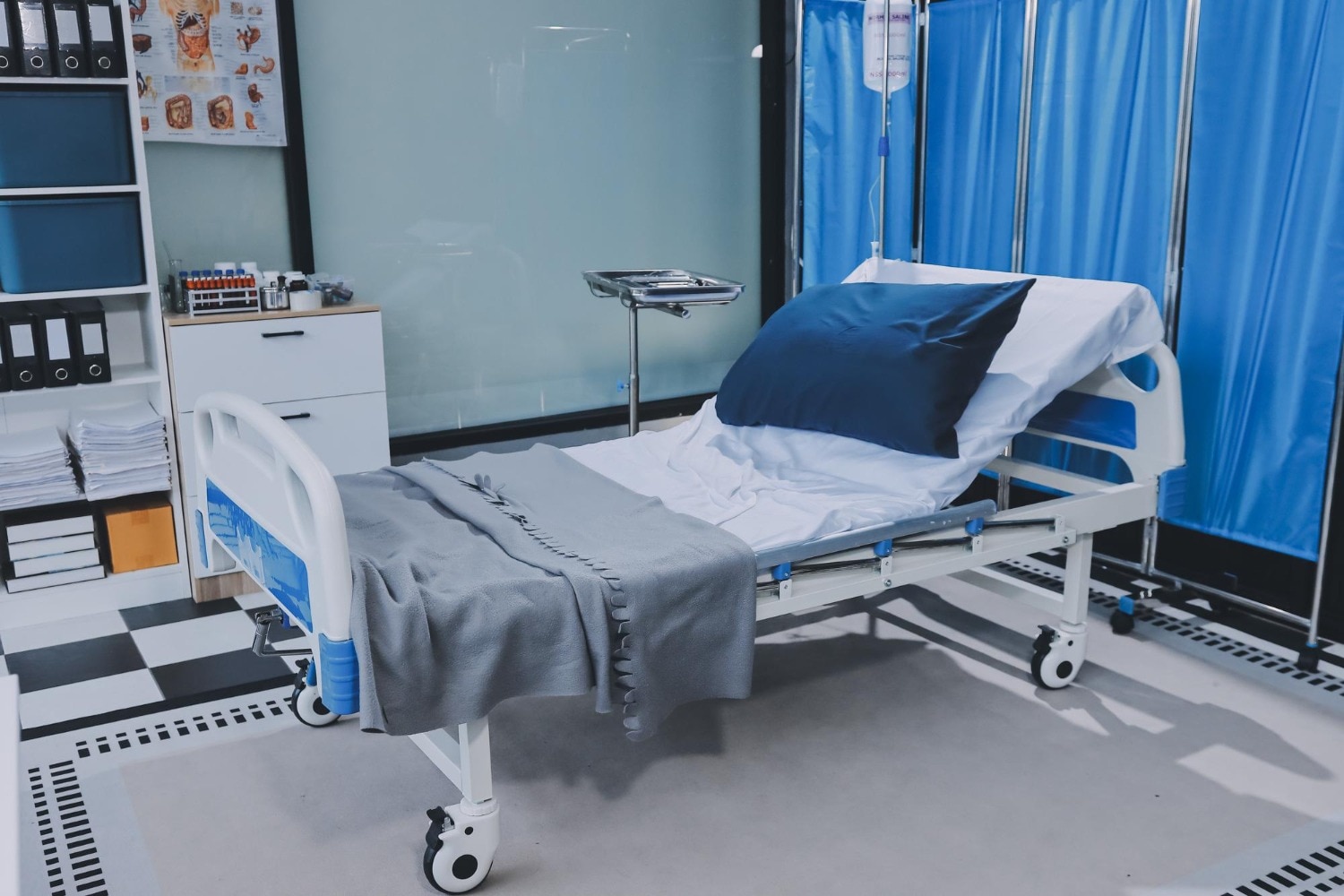
The practical semi fowler cot deluxe benefits depend on what “deluxe” includes. A manual crank avoids mains power, batteries and electrical-control failures, but staff must reposition the patient while turning it, and frequent changes take more time and effort.
Fixed height is acceptable for short-stay care; it becomes a handling problem when older, weak or heavier patients need repeated transfers.
| Option | What it means | When it applies |
|---|---|---|
| Fixed examination couch | Flat, simple and inexpensive | Brief examinations with little observation |
| Semi-Fowler cot | Manual backrest adjustment | Feeding, comfort and short recovery stays |
| Standard Fowler or two-function bed | More positioning, often with height adjustment | Regular transfers and broader inpatient care |
| Electric semi-Fowler bed | Powered positioning with less staff effort | Frequent repositioning or limited caregiver strength |
Choose semi fowler cot deluxe hospital beds for clinics in Chennai when the clinic has reliable staff to operate the mechanism, limited electrical infrastructure, and enough patient turnover to use the positioning feature daily. Reject the upgrade when the cot mainly adds decorative accessories, lacks rails or brakes, or omits load documentation and replacement-parts support.
These are hospital beds for small clinics, not substitutes for advanced respiratory or long-stay care.
What are you actually getting for the upgrade?
The upgrade earns its price through positioning, not the word “deluxe.” A manual hospital cot in Chennai avoids mains power, batteries and control-box failures, but staff must turn a crank or operate a lever while keeping the patient stable. That suits occasional backrest changes; frequent repositioning becomes slower and physically demanding.
Check the documented safe working load, not a vague “heavy-duty” claim. It must cover the patient and any permitted load, while the frame, casters and brakes remain stable during transfers. The mattress must match the cot’s length, width, thickness and backrest hinge; an oversized mattress can slide, while gaps at the frame create entrapment risks.
A supplied foam mattress also does not prove pressure-injury prevention.
Side rails add value only after a patient assessment. A rail can prevent an unassisted roll from bed, yet create climbing, fall or entrapment hazards for a confused or restless patient. Confirm how each rail locks, whether it works with the mattress thickness, and whether staff can lower it during transfers.
Ask the seller to specify what the semi fowler cot deluxe benefits actually include:
- Backrest range and adjustment method, plus whether height or leg-rest adjustment exists
- Patient capacity, safe working load, and the document supporting those figures
- Mattress dimensions, material, cover cleaning instructions, and replacement availability
- Rail type, operating clearance, and compatibility with the care plan
- Included brakes, IV pole, drainage-bag hooks, overbed table, and spare-part support
If the package adds cosmetic accessories but omits load documentation or replacement parts, reject the upgrade.
Will the cot fit your rooms, transfers, and daily movement?
A cot that fits the room on paper can still fail at the doorway, lift, or bedside. Measure the assembled bed at its widest and longest points, including raised side rails, IV pole, mattress, crank handle, and brake pedals.
Compare those figures with every door, corridor pinch point, lift opening, and room entrance—not just the patient room.
1. Check the usable deck dimensions and mattress fit. Ask for the mattress platform length and width, maximum backrest angle, and the gap around the mattress. A generic mattress can slide during adjustment and create entrapment gaps.
2. Mark working clearances. Keep about 900 mm beside the bed for staff and transfers where the room allows, and check the foot-end space needed for a wheelchair, trolley, or stretcher. A fixed-height cot can make transfers harder for older, weak, or bariatric patients.
3. Inspect movement hardware. Confirm four swivel casters, wheel diameter, individual or central locking, brake access from either side, and a steering feature if staff must move the cot alone. Test it over thresholds and across the clinic’s actual flooring.
4. Verify utility access. Check the location of oxygen and suction outlets, electrical sockets, IV-pole sockets, drainage-bag hooks, and the crank. These must remain reachable without trapping lines under wheels or between the frame and wall.
For hospital beds for small clinics, a manual hospital cot in Chennai can simplify placement because it needs no mains supply or battery. Order only after a staff member pushes, brakes, and turns the fully loaded cot through the real route.
Can it withstand Chennai cleaning, humidity, and repeated use?
A low purchase price becomes expensive when humidity rusts the frame, a cracked cover harbours soil, or a failed crank removes the clinic’s only recovery bed from service. For hospital beds for small clinics, inspect cleanability and parts support before judging the “deluxe” label.
- Look for sealed welds, smooth powder-coated surfaces, capped tube ends, minimal crevices and a mattress cover that can be removed, cleaned and replaced. Ask for written compatibility with your disinfectant; repeated exposure to unsuitable chlorine, alcohol or quaternary-ammonium products can damage coatings, plastics and upholstery.
- Test every brake, castor, side-rail latch, crank and moving joint with a loaded bed. Confirm that rails lock without finger traps, the bed stays stable during transfers, and the backrest cannot drop unexpectedly.
- Ask how the frame and fasteners are protected against Chennai’s humidity, and inspect underneath the mattress platform for exposed steel, bubbling paint or early rust. Schedule cleaning, lubrication and bolt checks rather than waiting for stiffness or rattling.
- Request prices and lead times for castors, crank assemblies, side-rail hardware, mattress covers and replacement mattresses. Ask Optimal Aid India or any clinic bed supplier in Chennai who handles repairs, where parts are stocked and the promised response time.
| Check | Evidence to request | Cost if missed |
|---|---|---|
| Cleaning | Disinfectant compatibility in writing | Damaged surfaces and early replacement |
| Safety | Load, brake and rail inspection record | Falls, transfers injuries or downtime |
| Service | Parts list, warranty and response time | Weeks without a usable bed |
| Power | Manual operation, or IEC 60601-2-52 evidence for powered movement | Unsafe movement or unsuitable procurement |
Related products
 | Hospital Furniture Semi Fowler Deluxe (Manual) Bed – User Manual In Chennai 🔧 1. View product → |
 | Cot Series Semi Flowler Cot Deluxe Wheel Leg Manual Semi Flowler Cot Deluxe Wheel Leg Manual In Chennai. We wre one of the Leading and best quality manufacturer of Hospital Furniture In chennai and we... View product → |
What should your purchase decision say after the inspection?
Write BUY only when the inspection shows that semi-Fowler cot deluxe hospital beds for clinics in Chennai solve a repeated care need, fit the room, and remain serviceable within your budget. The backrest’s usefulness matters more than the word “deluxe.”
- Patient mix: Choose BUY when feeding, respiratory comfort, examination, or post-procedure observation requires frequent upper-body positioning. Choose REJECT when most visits are brief examinations or when immobile patients need a documented pressure-redistributing mattress.
- Room and transfers: Choose BUY only if the cot clears doors, walls and equipment, locks securely, and lets staff transfer older, weak or bariatric patients safely. Fixed height is a rejection point when lifting already strains your team.
- Workload: Choose BUY when staff can operate the manual crank without unsafe patient handling. Reject it if repeated repositioning will slow care or create back-injury risk.
- Cost and lifespan: Count the mattress, rails, castors, crank assemblies, cleaning-compatible finish and replacement parts—not just the invoice. Ask a clinic bed supplier in Chennai for response times and written load and warranty details.
The semi fowler cot deluxe benefits justify purchase when reliable brakes, a compatible mattress and accessible spare parts support several years of use. Reject the quote if “deluxe” adds cosmetic accessories but omits height adjustment, load documentation or service support.
Your final note should state BUY, BUY WITH CONDITIONS, or REJECT, followed by the failed inspection point and its likely operating consequence.
Frequently asked questions
When does a semi-Fowler cot justify its place in a small clinic?
It earns its space when patients need repeated upper-body positioning for feeding, respiratory comfort, examination, transfers or post-procedure observation. A flat examination couch is more suitable for brief visits that do not require repositioning.
What are the main semi-Fowler cot deluxe benefits?
The upgrade is worthwhile when it provides controlled backrest elevation, stable mattress support, safer patient handling and easier cleaning. Inspect the adjustment mechanism and frame rather than judging the cot by the word deluxe alone.
How do you check whether a hospital cot fits a small clinic?
Measure the cot, door clearances, corridor width, lift dimensions and turning points. Test the route with the cot occupied or loaded, and leave enough space for staff to transfer and examine the patient.
Can a semi-Fowler cot withstand Chennai cleaning, humidity and repeated use?
Check for sealed, wipeable surfaces, corrosion-resistant hardware, protected joints and castors that keep rolling after cleaning. Ask the supplier which disinfectants the mattress cover, frame finish and moving parts tolerate.
What should you inspect before buying a semi-Fowler cot in Chennai?
Verify the backrest range, adjustment effort, mattress dimensions, working load, castor brakes, rail or edge protection, frame stability, warranty terms, spare-parts access and delivery route into the clinic.
Keywords